Showing posts with label jell point. Show all posts

Wednesday, April 17, 2013

Jell Tests

Jam and jelly should be jelled.  That's why it's called 'jelly' instead of 'runny'.   

Right?

The big question when you're making jam is this:  How do you know when it's jelled?  It's a good question because hot jam is pretty runny.  It doesn't fully jell until it's cool.  So is there a way to tell if it's going to jell all right when it's still hot?

If you're using pectin and followed the directions you can be reasonably confident that your jam will jell.   However, if you've decided not to use pectin, then it's really important to be able to read the jam.

That can be intimidating.

Not to worry!  Here are three tests you can do on your jam to see if it's done.
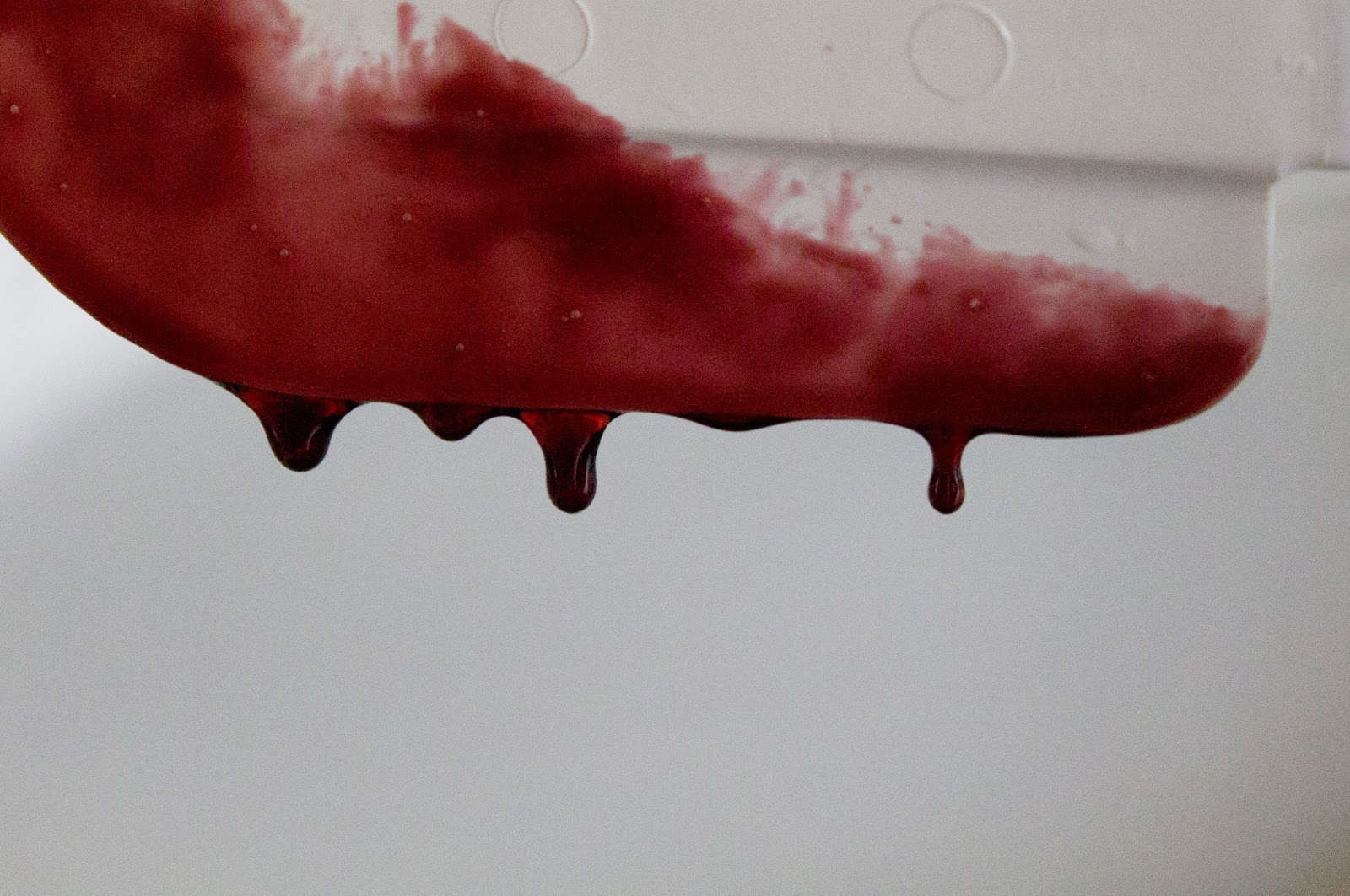
Double Drips.  Dip a spoon or spatula into the hot jam and watch as it pours off. Early in the process, it will pour off in a very thin cascade ending in a single drip. As the jam reaches the jell point, it will come off in multiple drips. If those drips hang on the spoon for a bit, then you’ve reached a soft jell stage. When you are sure you are seeing double drips or if the jam begins to come off the spoon very thickly, then the jam is done and ready to bottle. 


Sheeting.  When jam has reached a very firm jell stage, it will come off the spoon or spatula in a sheet. If your jam sheets off the spoon, it’s done and ready to bottle.


Wrinkle Test. When you start your jam, put a small plate or bowl into the freezer.  By the time the jam is done cooking, the plate will be very cold. Drop a small spoonful of the finished jam onto the cold plate and tilt it so the jam runs. The jam will cool fast.  Push the jam a bit with the spoon.  If the jam has reached the jelling stage, it will wrinkle as you push it. If it wrinkles, the jam is done and you’re ready to bottle it.

Thursday, March 7, 2013

A Jell by Any Other Name Would Not Be Syrup


Jelling is kind of a big deal in the Jam World.   It's what makes jam jam instead of syrup.

There's a lot of confusion over the terms 'hard jell' and 'soft jell', so this post is to help clarify that.


Here's the jelling continuum:    Hard jell ------- Firm jell ------- Soft jell ------- Syrup.

Hard jells are carve-able.   A really hard jell can be hard to spread on toast.   

Firm jells hold their shape when you spoon them out of the jar, but they wiggle.

Soft jells are like pudding.   They're thick, but not too runny.   

Syrups are runny. 

Mostly people use pectin to get a good jell in their jam, but you can get a jell without it, too.

Jell Without Pectin
The top photo is my Honey Vanilla Orange Marmalade that I made without pectin.   It is just this side of jam instead of syrup - but just this side.   It's sort of jam when it's been in the fridge.   When it's hot, it's definitely syrup.   [Most jams turn to syrup when you heat them.]

In order to get a jell without pectin, you have to use a lot of sugar and you have to boil the water out of the jam so it's thick.    You can tell how much water is out of the jam by how high the temperature gets. We call these temperatures the jell points.   They vary according to altitude.

Jelling temps at different altitudes
Sea level: 220 degrees
1000 ft:  above 218 degrees
2000 ft:  above 216 degrees
3000 ft:  above 214 degrees
4000 ft:  above 212 degrees

The problem with making jam this way is that there's a fine line between jam and really sticky candy that gets stuck in your teeth and is impossible to spoon out of the jar.   I know this for a fact.   One batch was jelled all right, but wouldn't come out of the jar when you got it cold out of the fridge.    That's not my idea of good jam - even though it was a good jell. 

Even when I watch the temps very carefully, there's no promise that it won't be either too soft or too hard.    I hate that.    Which is why I usually use pectin. 

There are a couple of fruits that are so high in pectin that you don't have to use it or watch the temps.   You don't have to use pectin with cranberries and elaeagnus berries- they'll set hard without it. 

 
This elaeagnus orange ginger jam is carveable - way hard on the jell continuum.    Elaeagnus berries are a high pectin fruit and I added pectin to the jam, too, so this jam got a pectin double whammy.   Delicious, but not soft.   Next time I'm leaving out the pectin.


Personally, I like my jam in the middle - like this blueberry lime jam.    It's soft, like pudding.   Not quite runny.  Easy to spoon.  Easy to spread in a thin layer.

If you ever get a jar of my jam, this is probably what it will be like.  


When using Sure-Jell low sugar, Ball low sugar or Dutch All Natural lite pectins, if I want a firm jell, then I use 1 Tb of pectin per 1 cup of fruit.  That's how I write my jam recipes for the blog and that's how I test recipes out for the first time. 

Since I don't mind a softer jell, I often use 1 Tb of pectin for 1 1/3 cups of fruit.   This means that I can use 4 Tb of pectin for 5-6 cups of fruit.   I'll still get a soft jell.      

For you, this means that if you have a little bit more fruit than a recipe calls for, or a little bit less pectin that a recipe calls for, you don't have to worry.    Use what you have - you'll still get a great jam with a soft jell. 
Related Posts Plugin for WordPress, Blogger...