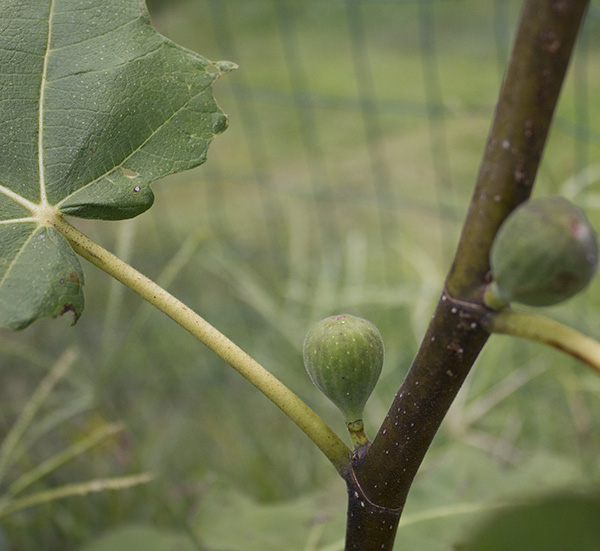
I have figs!
Two years ago I planted a Chicago Hardy fig tree. In November. Right before that nuclear winter we had that lasted forever - you know, the one with the Polar Vortex from hell.
That winter.
And the next spring, the fig came up anyway. So here's my shout out to Stark Bros where I got the fig and where I get a lot of my fruit trees/plants. Great stock and they'll replace if the plants don't make it a year.
The plant died back to the ground, but that spring the fig bore 3 whole figs, which got the size of marbles and then fell off before they ripened.
Last winter the fig died back again all the way to the ground, but popped up this spring when the ground warmed up. I have dozens of tiny figs along the branches. And one ripe one.
The figs get suddenly larger when they ripen, then they turn that color and droop. And when they are ripe, I will make this tart. Again. I made this recipe up myself. It is delicious. I plan on eating it several more times this season.
Because I have figs.
Ricotta Tart with Honey Cinnamon Glazed Figs
www.rurification.com
1 dozen or so very ripe figs [California Mission are fine]
1 lb ricotta cheese
1/4 cup white sugar
3 eggs
1 tsp vanilla
1/4 tsp cinnamon for the filling + 1/4 tsp more cinnamon for the glaze
1/4 cup honey
Your favorite pie or tart crust for bottom of tart/pie plate.
Directions:
Preheat oven to 350. Make the crust and put it in the bottom of a tart or pie plate.
Filling: Mix the ricotta, eggs, sugar, vanilla and 1/4 tsp cinnamon well. Put into pie crust.
Topping: Wash and slice the figs in half. Arrange the figs cut side up around the top of the filling, fat ends out, skinny ends pointing to the center.
Glaze. Heat the honey and 1/4 tsp cinnamon in the microwave for 30 seconds. Mix it as well as you can [it won't want to mix]. Pour/spread glaze evenly on all figs and around the top of the tart. [If you LOVE this glaze, feel free to make more. It's good when it's baked and oozing all over the place.]
Bake 60 minutes. Cool. Delicious at room temp or chilled.
Showing posts with label cinnamon. Show all posts
Sunday, August 30, 2015
Tuesday, August 28, 2012
Mango Chutney - Traditional Style
Last year I made some wonderful peach chutney. I love it. Seriously love it.
I love it over cream cheese on crackers. I love it even more on brie. I love it poured over a pork roast and slow roasted for hours until the outsides are crispy. I love it straight out of the jar with a spoon.
I pretty much thought I was a genius after I made that chutney. It's some gooood stuff.
I've been thinking about chutneys a lot lately. Chutneys came from India with strong flavors and textures and heat. They usually have a fruit base, are heavily sweetened and then the sweet is balanced with vinegar. I've seen chutneys flavored with cinnamon and cloves, and some with ginger, garlic and mustard. I've seen chutneys heavy on the heat - with loads of red pepper flakes and some with just a whisper of heat.
In all my reading, the consensus is that a lot of traditional chutneys were made with mango and lime. Heavy on citrus overtones. Spiced with cinnamon and cloves, with lots of heat. So I thought I'd play around.
The first thing I decided was that it needed heat, but not heavy heat. I was thinking more along the lines of cat-in-your-lap kind of heat and not the white hot heat of a thousand suns. I realize that right off the bat I've deviated from the traditional, but no one at my house would eat it if it is too hot. We're pepper wimps.
For citrus, I used the zest and juice of a lime, plus some lemon and orange juice for flavor.
I used loads of garlic and an onion.
For spice, I used candied ginger, and cinnamon and cloves. And for the sweet, I opted for brown sugar.
I used white wine vinegar, because it's my own and I much prefer it over the apple cider vinegar that the vast majority of chutney recipes call for. I used regular raisins instead of the golden ones that are traditional because that's what I had. If you want to use golden raisins and cider vinegar instead, then go for it. I'm sure it will be delicious.
One of the things I like best about chutneys is that they are a slow food.
Slow. Food.
You put it in a pot, heat it all together and the cook it until the flavors are melded and the color is dark and mysterious and delicious. Take your time.
Mango Chutney
When you're happy with it, ladle it into jars and process for canning. Makes 3 pints.
Note: Thick is in the eye of the beholder. If it ends up runnier than you wanted, then use it over meat. It's probably my favorite way to eat chutney.
To use it on meat, brown and season the meat with salt and pepper, then transfer it to an oven safe pot or pan. Pour the whole pint of chutney over it and cook it uncovered at 300 degrees until your meat falls apart. Delicious!
I love it over cream cheese on crackers. I love it even more on brie. I love it poured over a pork roast and slow roasted for hours until the outsides are crispy. I love it straight out of the jar with a spoon.
I pretty much thought I was a genius after I made that chutney. It's some gooood stuff.
I've been thinking about chutneys a lot lately. Chutneys came from India with strong flavors and textures and heat. They usually have a fruit base, are heavily sweetened and then the sweet is balanced with vinegar. I've seen chutneys flavored with cinnamon and cloves, and some with ginger, garlic and mustard. I've seen chutneys heavy on the heat - with loads of red pepper flakes and some with just a whisper of heat.
In all my reading, the consensus is that a lot of traditional chutneys were made with mango and lime. Heavy on citrus overtones. Spiced with cinnamon and cloves, with lots of heat. So I thought I'd play around.
The first thing I decided was that it needed heat, but not heavy heat. I was thinking more along the lines of cat-in-your-lap kind of heat and not the white hot heat of a thousand suns. I realize that right off the bat I've deviated from the traditional, but no one at my house would eat it if it is too hot. We're pepper wimps.
For citrus, I used the zest and juice of a lime, plus some lemon and orange juice for flavor.
I used loads of garlic and an onion.
For spice, I used candied ginger, and cinnamon and cloves. And for the sweet, I opted for brown sugar.
I used white wine vinegar, because it's my own and I much prefer it over the apple cider vinegar that the vast majority of chutney recipes call for. I used regular raisins instead of the golden ones that are traditional because that's what I had. If you want to use golden raisins and cider vinegar instead, then go for it. I'm sure it will be delicious.
One of the things I like best about chutneys is that they are a slow food.
Slow. Food.
You put it in a pot, heat it all together and the cook it until the flavors are melded and the color is dark and mysterious and delicious. Take your time.
Mango Chutney
- 4 cups of mangoes, peeled and chopped [about 3 large mangoes]
- zest and juice of 1 lime
- juice of 1 lemon
- juice of 1 orange or 2 clementines
- 4 cloves of garlic, minced
- 1 onion, chopped finely
- 1/4 cup finely chopped candied ginger
- 1/2 cup raisins
- 2 cups brown sugar
- 1 cup white wine vinegar
- 1 Tablespoon mustard seed
- 1/4 teaspoon red pepper flakes
- 1/2 teaspoon cinnamon
- 1/4 teaspoon cloves
When you're happy with it, ladle it into jars and process for canning. Makes 3 pints.
Note: Thick is in the eye of the beholder. If it ends up runnier than you wanted, then use it over meat. It's probably my favorite way to eat chutney.
To use it on meat, brown and season the meat with salt and pepper, then transfer it to an oven safe pot or pan. Pour the whole pint of chutney over it and cook it uncovered at 300 degrees until your meat falls apart. Delicious!
Subscribe to:
Posts (Atom)


