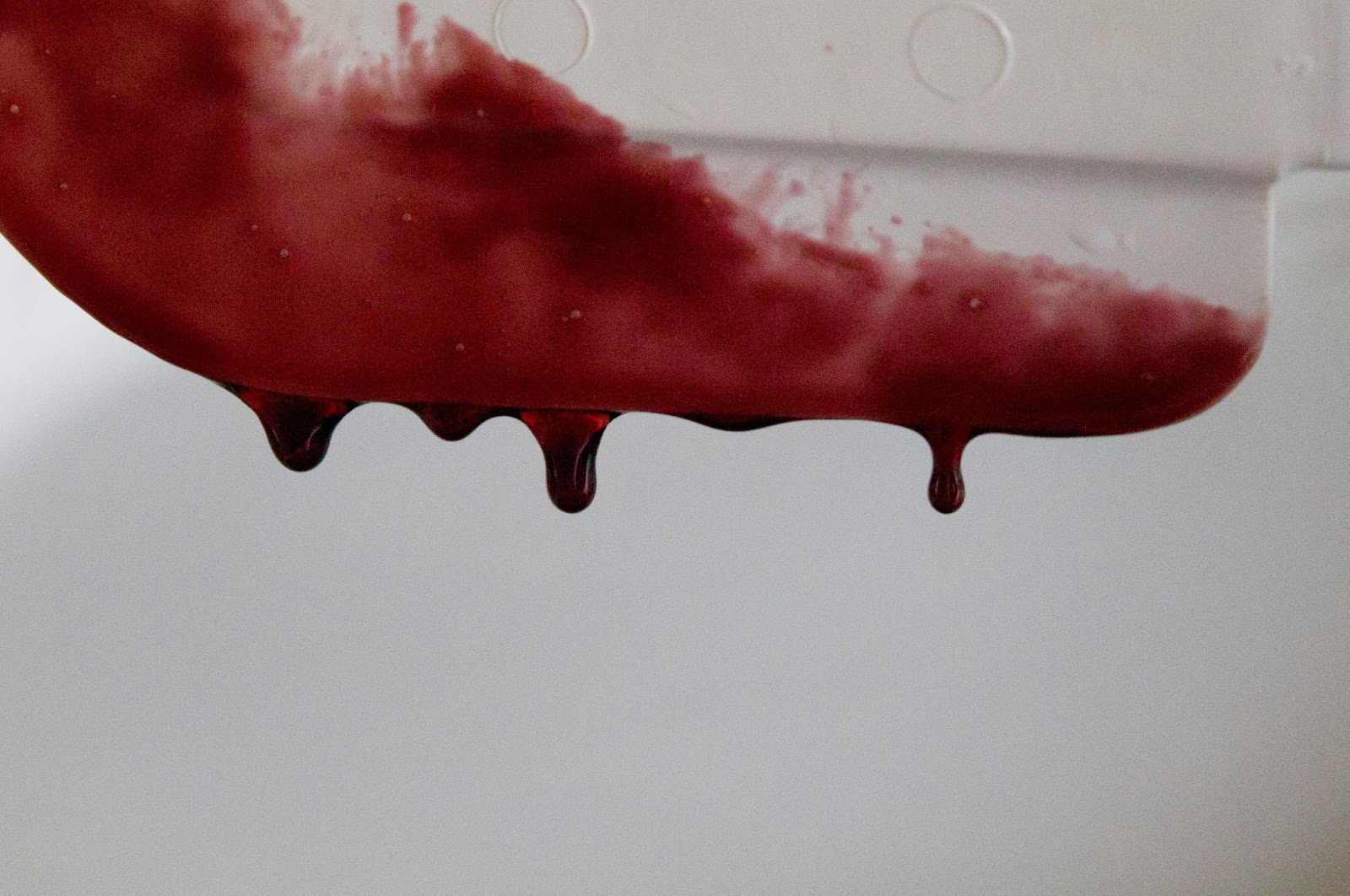
They're finally ripe! I've been waiting on elderberries since they first put out new leaves in the spring. This year our bush was loaded with flowers and I've been watching the berries slowly ripen for months.
I've been gathering the berries off the stems and putting them right in the freezer so when I have enough I can make jam. On Friday, my neighbor said I could come pick off her place, too, so I have loads!
When they were all stripped, I had 10 cups of berries. I added 4 cups of water and boiled. After I strained it, I had 5 1/2 cups of juice and I followed this recipe here: http://rurification.blogspot.com/2012/09/elderberry-jelly.html
Mostly.
I used 1 Tablespoon pectin per cup of juice. And for sweetening, I used 1 cup of honey from my very own bees [scavenged from damaged comb from last winter] and 1 cup sugar. Perfect.
What kinds of jam and jelly are you making this year?
Showing posts with label jelly. Show all posts
Monday, August 22, 2016
Monday, February 9, 2015
Marmalade Recipe Roundup
I love marmalade on toast. Also, on pancakes. Also, on Blueberry Steel Cut Oats with yogurt. Also, on brownies. Also, on ice cream. Also, on brownies with ice cream.
I love marmalade!
Here are a few tips and recipes to get you started.
- Marmalade Tools
- Mixed Fruit Marmalade
- Four Fruit Marmalade
- Rhubarb Marmalade
- Honey Vanilla Orange Marmalade
- Blood Orange Marmalade
- Old Fashioned, Southern Style Lemon Pumpkin Pickle [Marmalade]
- Chocolate Orange Marmalade
And once you have the jam made, here are some fabulous things you can do with it!
Orange Marmalade Cranberry Jammy Oatcakes
Eric's Jam Bars
Blintzes
Want the recipe for these Marmalades and a whole lot of other terrific jam recipes? Check out my ebook: A Simple Jar of Jam at www.rurification.etsy.com. You can preview the book by clicking the link on the sidebar. Every purchase helps support this site. Thank you!
Thursday, October 10, 2013
Pear Jam Roundup
I love fall canning season. I especially love pear jams. I was going back through the blog archives and found some pear jam recipes that you might like.
Pears are great paired with other fruit, winter spices and even chocolate. Check these out.
Pear Ginger Jam
Chocolate Ginger Pear Jam
Pear Maple Jam
Pear Vanilla Nutmeg Jam
Apple-Pear Maple Jam
Pear-Plum Vanilla Jam
Pear Brown Sugar Cardamom Jam
All of these recipes plus a whole lot more are in my ebook - A Simple Jar of Jam. Follow the links on my sidebar for a preview and to purchase and download the book from Rurification's Etsy shop.
Thursday, June 20, 2013
Strawberry Vanilla Jam
It's finally summer. I scored these berries a couple of weeks ago, fresh from the field. I bought a whole flat figuring on making jam and eating as many fresh as we wanted. I spent an hour hulling and slicing the berries - 2 gallons in all.
K2 requested a few batches of her favorite Strawberry Vanilla Jam. It's an easy recipe and makes a delicious jam. I made two big batches
Strawberry Vanilla Jam
www.rurification.com

5 cups sliced strawberries
1 cup water
5 tablespoons low sugar pectin
3 cups sugar
2 tablespoons vanilla extract
Crush the berries and put them in a big pot with the water and pectin. Stir to dissolve the pectin. Bring to a hard rolling boil. Boil 1 minute. Add sugar and vanilla and stir well until dissolved. Return to hard boil. Boil hard for 1 minute. Ladle into jars.
Yield: 3.5 pints
I don't think jam could get much easier than that.
For more recipes as easy as this one, check out my ebook on the sidebar. A Simple Jar of Jam: 180+ recipes & variations for jam using low sugar pectin.
Thursday, May 23, 2013
Grape Jelly from Store Bought Juice
Jelly! Real jelly! The kind you can see through. And it holds its shape just like store bought jelly And the color - it's gorgeous.
And I didn't have to squish the grapes and strain anything because the nice grape juice manufacturer people did it for me.
I love them.
This is grape jelly you make yourself from frozen juice concentrate from the store. I got the stuff with no added sugar or preservatives or anything but grape juice. Then I used my basic recipe for making jam by proportion.
Jelly Proportions for firm jam - fruit, sugar, pectin
www.rurification.com
I've extolled the virtues of low sugar pectin before. I like it because I control the amount of sugar that goes into the jam and I still get the jell I want. I've made this jelly with all Splenda before and it works great and tastes terrific. In fact, you don't have to use any sugar at all.
You can use juice made from frozen juice concentrate [which a nutritionist friend tells me is better for you anyway because more of the vitamins are intact] or you can use juice in a can or bottle or jar or juice that you've done up yourself.
It's important to start with juice that has No Added Sugar. Sweetened juices mess with the pectin and you can't get a reliable jell. Don't do that to yourself.
You can start with whatever amount of juice you have. Measure it out and then once you know how many cups you have, figure the pectin and sugar and make your jelly.
It's easy.
You can make a big batch or a small batch.
Don't use more than 6 cups of juice at a time per batch. I like to use 4 cups per batch. Put the juice and pectin in a pot and bring to a hard rolling boil that you can't stir down. Boil hard for 1 minute. Add sugar and return to hard boil. Boil 1 minute. Ladle into jars.
Yield: For every 2 cups of juice I start with, I get 2.5 cups of jelly.
And I didn't have to squish the grapes and strain anything because the nice grape juice manufacturer people did it for me.
I love them.
This is grape jelly you make yourself from frozen juice concentrate from the store. I got the stuff with no added sugar or preservatives or anything but grape juice. Then I used my basic recipe for making jam by proportion.
Jelly Proportions for firm jam - fruit, sugar, pectin
www.rurification.com
- 1 cup fruit juice
- 1 tablespoon low sugar pectin per cup of juice
- 1/2 cup sugar per cup of juice
I've extolled the virtues of low sugar pectin before. I like it because I control the amount of sugar that goes into the jam and I still get the jell I want. I've made this jelly with all Splenda before and it works great and tastes terrific. In fact, you don't have to use any sugar at all.
You can use juice made from frozen juice concentrate [which a nutritionist friend tells me is better for you anyway because more of the vitamins are intact] or you can use juice in a can or bottle or jar or juice that you've done up yourself.
It's important to start with juice that has No Added Sugar. Sweetened juices mess with the pectin and you can't get a reliable jell. Don't do that to yourself.
You can start with whatever amount of juice you have. Measure it out and then once you know how many cups you have, figure the pectin and sugar and make your jelly.
It's easy.
You can make a big batch or a small batch.
Don't use more than 6 cups of juice at a time per batch. I like to use 4 cups per batch. Put the juice and pectin in a pot and bring to a hard rolling boil that you can't stir down. Boil hard for 1 minute. Add sugar and return to hard boil. Boil 1 minute. Ladle into jars.
Yield: For every 2 cups of juice I start with, I get 2.5 cups of jelly.
Labels:
flexible batch,
food,
jam,
jelly,
juice,
pectin,
proportions,
recipes,
small batch
Wednesday, April 17, 2013
Jell Tests
Jam and jelly should be jelled. That's why it's called 'jelly' instead of 'runny'.
Right?
The big question when you're making jam is this: How do you know when it's jelled? It's a good question because hot jam is pretty runny. It doesn't fully jell until it's cool. So is there a way to tell if it's going to jell all right when it's still hot?
If you're using pectin and followed the directions you can be reasonably confident that your jam will jell. However, if you've decided not to use pectin, then it's really important to be able to read the jam.
That can be intimidating.
Not to worry! Here are three tests you can do on your jam to see if it's done.
Double Drips. Dip a spoon or spatula into the hot jam and watch as it pours off. Early in the process, it will pour off in a very thin cascade ending in a single drip. As the jam reaches the jell point, it will come off in multiple drips. If those drips hang on the spoon for a bit, then you’ve reached a soft jell stage. When you are sure you are seeing double drips or if the jam begins to come off the spoon very thickly, then the jam is done and ready to bottle.
Sheeting. When jam has reached a very firm jell stage, it will come off the spoon or spatula in a sheet. If your jam sheets off the spoon, it’s done and ready to bottle.
Wrinkle Test. When you start your jam, put a small plate or bowl into the freezer. By the time the jam is done cooking, the plate will be very cold. Drop a small spoonful of the finished jam onto the cold plate and tilt it so the jam runs. The jam will cool fast. Push the jam a bit with the spoon. If the jam has reached the jelling stage, it will wrinkle as you push it. If it wrinkles, the jam is done and you’re ready to bottle it.
Labels:
jam,
jell,
jell point,
jell test,
jelly
Thursday, March 7, 2013
A Jell by Any Other Name Would Not Be Syrup
Jelling is kind of a big deal in the Jam World. It's what makes jam jam instead of syrup.
There's a lot of confusion over the terms 'hard jell' and 'soft jell', so this post is to help clarify that.
Here's the jelling continuum: Hard jell ------- Firm jell ------- Soft jell ------- Syrup.
Hard jells are carve-able. A really hard jell can be hard to spread on toast.
Firm jells hold their shape when you spoon them out of the jar, but they wiggle.
Soft jells are like pudding. They're thick, but not too runny.
Syrups are runny.
Mostly people use pectin to get a good jell in their jam, but you can get a jell without it, too.
Jell Without Pectin
The top photo is my Honey Vanilla Orange Marmalade that I made without pectin. It is just this side of jam instead of syrup - but just this side. It's sort of jam when it's been in the fridge. When it's hot, it's definitely syrup. [Most jams turn to syrup when you heat them.]
In order to get a jell without pectin, you have to use a lot of sugar and you have to boil the water out of the jam so it's thick. You can tell how much water is out of the jam by how high the temperature gets. We call these temperatures the jell points. They vary according to altitude.
Jelling temps at different altitudes
Sea level: 220 degrees
1000 ft: above 218 degrees
2000 ft: above 216 degrees
3000 ft: above 214 degrees
4000 ft: above 212 degrees
The problem with making jam this way is that there's a fine line between jam and really sticky candy that gets stuck in your teeth and is impossible to spoon out of the jar. I know this for a fact. One batch was jelled all right, but wouldn't come out of the jar when you got it cold out of the fridge. That's not my idea of good jam - even though it was a good jell.
Even when I watch the temps very carefully, there's no promise that it won't be either too soft or too hard. I hate that. Which is why I usually use pectin.
There are a couple of fruits that are so high in pectin that you don't have to use it or watch the temps. You don't have to use pectin with cranberries and elaeagnus berries- they'll set hard without it.
This elaeagnus orange ginger jam is carveable - way hard on the jell continuum. Elaeagnus berries are a high pectin fruit and I added pectin to the jam, too, so this jam got a pectin double whammy. Delicious, but not soft. Next time I'm leaving out the pectin.
Personally, I like my jam in the middle - like this blueberry lime jam. It's soft, like pudding. Not quite runny. Easy to spoon. Easy to spread in a thin layer.
If you ever get a jar of my jam, this is probably what it will be like.
When using Sure-Jell low sugar, Ball low sugar or Dutch All Natural lite pectins, if I want a firm jell, then I use 1 Tb of pectin per 1 cup of fruit. That's how I write my jam recipes for the blog and that's how I test recipes out for the first time.
Since I don't mind a softer jell, I often use 1 Tb of pectin for 1 1/3 cups of fruit. This means that I can use 4 Tb of pectin for 5-6 cups of fruit. I'll still get a soft jell.
For you, this means that if you have a little bit more fruit than a recipe calls for, or a little bit less pectin that a recipe calls for, you don't have to worry. Use what you have - you'll still get a great jam with a soft jell.
Labels:
high altitude,
jam,
jell point,
jelly
Wednesday, March 6, 2013
The Lowdown on Low Sugar Pectins
There are a lot of pectins out there. It can get really confusing.
Here's a quick run down of the very basic types that I have found here in southern Indiana:
Liquid pectin: Certo
Liquid pectin is not interchangeable with powdered pectin. I'll do a post about liquid pectin later.
Powdered pectin [regular, classic, full sugar]: Ball Classic, Sure-Jell, Dutch Jell All Natural
This is the pectin our grandmothers used. It's easy to find and requires a lot of sugar - often a lot more sugar than fruit. The Ball Classic Pectin recipe for strawberry jam calls for 5 cups of crushed berries and 7 cups of sugar. You must use that much sugar to achieve a good jell. These pectins work because they bind the acid in the fruit to the sugar. Less sugar, less jell.
Powdered pectin, Instant for freezer jam: Ball, Mrs. Wages
This pectin is newer, developed especially for freezer jams.
Powdered pectin lite, low or no sugar: Ball, Dutch All Natural, Mrs. Wages, Pomona's
Most of these are newer pectins developed so that you can get a good jell in your jam without using a lot of sugar. In most cases, you can use no sugar at all. These pectins bind to calcium instead of the sugar. [Which means if you have a lot of calcium in your water, you'll get a firmer jell.]
Here's a list of even more pectin brands out there [though it is not complete, either]: Pickyourown.org
In this area of southern Indiana, I can no longer find Sure-Jell pectins and most stores carry only the Certo liquid pectin and Ball powdered pectins. However, when I checked my local Amish store, Freedom Country Store, in Worthington, Indiana, I found a much better selection of pectin, some in bulk, at much better prices.
Less sugar is better
My recommendation for pectin is go for the low sugar pectins. Skip the classic pectins because they require too much sugar. Jam just tastes better if it's mostly fruit.
This means you're going to have to pay attention to the pectin labels. A lot of those boxes and jars look alike. [This is why I have 4 jars of freezer pectin in my pantry instead of 4 jars of low sugar pectin. It will probably take me 4 years to use that much freezer pectin.]
So, what do you need to know about low sugar pectins?
1. Interchangeability. First off, not all powdered pectins are interchangeable! Some are, some aren't. In my experience, these powdered pectins are interchangeable: Sure-Jell low sugar pectin, Ball low sugar pectin, Dutch Jell All Natural Lite pectin.
These are not interchangeable:
One box [1.75 oz] of Ball, Sure Jell or Dutch All Natural will jell 4-6 cups of fruit
One box [1.75 oz] of Mrs. Wages will jell 12 cups of fruit
One box [1oz] of Pomona's will jell 16 cups of fruit.
2. Bulk packaging and pricing: It's not always possible to find each of these brands in bulk. Shipping these days is going to add a wad to the final bill. Do the best you can with what you have available.
Beware! Not all bulk packaging receives bulk pricing. Take a look at the Ball pricing - it's a hair more expensive to buy the 'bulk' jar. It costs me $.57/cup of fruit to go with the 1.75 oz box. It costs $..58/cup of fruit to use the 'bulk' jar. They're selling the convenience of flexible sized batches, not giving consumers a break in pricing because of bulk packaging. Also, those jars are only about 2/3 full.
3. Comparison in pricing to regular/classic pectins. In general, the low sugar pectins cost about 70% more than the classic pectins. Of course, that will be more than offset by the money you'll save on sugar. Add in the fact that low sugar jam is so much better tasting and better for you than the other stuff and low sugar pectin is well worth it. [Note: Ball Classic Pectin in the jar costs about the same as Ball Low Sugar pectin in the jar - no savings there at all.]
Here's a price comparison between Sure Jell regular pectin and Sure Jell low sugar pectin for a typical batch of my jam [with 4 cups of fruit, low sugar pectin and 2 cups of sugar] and the equivalent with classic pectin and the 6 cups of sugar that it would require. Sugar around here, in 20lb bags costs about $ .30/cup.
Sure Jell low sugar pectin for 4 cups of fruit: $2.99
2 cups of sugar: $ .60
Total cost for low sugar pectin and sugar for 4 cups of fruit: $3.59
Sure Jell regular pectin for 4 cups of fruit: $1.78
6 cups of sugar: $1.80
Total cost for regular pectin and sugar for 4 cups of fruit: $3.58
Since I like the low sugar jam so much better, it's worth one extra penny per batch to use low sugar pectin if that's all the low sugar pectin I could find at the store.
Here's the same comparison with my favorite low sugar pectin, which I can get in bulk close by: Dutch Jell All Natural Lite
Dutch Jell All Natural Lite low sugar pectin for 4 cups of fruit: $ .92
2 cups of sugar: $ .60
Total cost for low sugar pectin and sugar for 4 cups of fruit: $ 1.52
Dutch Jell All Natural Regular pectin for 4 cups of fruit: $ .52
6 cups of sugar: $1.80
Total cost for regular pectin and sugar for 4 cups of fruit: $2.32
It's a lot cheaper per batch to use the bulk Dutch Jell All Natural Lite pectin - the low sugar pectin and sugar cost 35% LESS than the regular pectin and sugar, even though the low sugar pectin by itself is more expensive. [Keep in mind that we haven't calculated the cost of the fruit, just the pectin and sugar.]
4. Additives: There's more than pectin in some of your pectins. Check the ingredients. Most pectins contain a form of dextrose, which is a sweetener with fewer calories than sugar. It is also used as a thickener. Citric acid is used to raise the acidity of the jam so that the pectin can do its thing and jell your jam. Other acids are: Calcium ascorbate, which is a combination of calcium and ascorbic acid or Vitamin C; and Fumaric acid, an organic acid found in nature. Potassium Sorbate is a preservative. Monocalcium phosphate is an inorganic leavening agent that causes foaming. I've listed the ingredients of each brand of low sugar pectin below.
Low Sugar Pectins: The breakdown
Here's a handy table that breaks down the cost according to how much each type of pectin costs per cup of fruit that it jells. These prices do not include shipping. I've also listed the extra ingredients, so you know what's in your pectin.
Ball Low Sugar: 1 Tb will jell 1 cup of fruit
cost [box]: $ .57/cup of fruit jelled
cost [bulk jar]: $ .58/cup of fruit jelled
ingredients: dextrose, fruit pectin, citric acid, calcium ascorbate
Sure Jell Low Sugar: 1 Tb will jell 1 cup of fruit
cost [box]: $ .74/cup of fruit jelled
ingredients: dextrose, citric acid, fruit pectin
Dutch Jell All Natural Lite: 1 Tb will jell 1 cup of fruit
cost [available only in bulk]: $ .23/cup of fruit jelled
ingredients: dextrose, pectin, citric acid
Mrs. Wages: 1 Tb will jell 3 cups of fruit. [1 box = 12-15 cups fruit]
cost [box]: $ .25/cup of fruit jelled
ingredients: polydextrose, fruit pectin, maltodextrin, fumaric acid, potassium sorbate, monocalcium phosphate
Pomona's: 1 Tb will jell 4 cups of fruit. [1 box = 16-20 cups fruit]
cost [box]: $ .25/cup of fruit jelled
cost [bulk]: $ .23 / cup of fruit jelled
ingredients: low methoxyl citrus pectin. [In separate packet for low acid fruit] monocalcium phosphate
So. Now you know. When you see pectin that you want to use, get a lot of it and store it. If you don't have a lot of choice to begin with then make the best decision you can based on your needs at the moment, which might be 'I'm here at this store right now and that's the only pectin I can get'. That's a great reason to use a certain brand of pectin.
Here's a quick run down of the very basic types that I have found here in southern Indiana:
Liquid pectin: Certo
Liquid pectin is not interchangeable with powdered pectin. I'll do a post about liquid pectin later.
Powdered pectin [regular, classic, full sugar]: Ball Classic, Sure-Jell, Dutch Jell All Natural
This is the pectin our grandmothers used. It's easy to find and requires a lot of sugar - often a lot more sugar than fruit. The Ball Classic Pectin recipe for strawberry jam calls for 5 cups of crushed berries and 7 cups of sugar. You must use that much sugar to achieve a good jell. These pectins work because they bind the acid in the fruit to the sugar. Less sugar, less jell.
Powdered pectin, Instant for freezer jam: Ball, Mrs. Wages
This pectin is newer, developed especially for freezer jams.
Powdered pectin lite, low or no sugar: Ball, Dutch All Natural, Mrs. Wages, Pomona's
Most of these are newer pectins developed so that you can get a good jell in your jam without using a lot of sugar. In most cases, you can use no sugar at all. These pectins bind to calcium instead of the sugar. [Which means if you have a lot of calcium in your water, you'll get a firmer jell.]
Here's a list of even more pectin brands out there [though it is not complete, either]: Pickyourown.org
In this area of southern Indiana, I can no longer find Sure-Jell pectins and most stores carry only the Certo liquid pectin and Ball powdered pectins. However, when I checked my local Amish store, Freedom Country Store, in Worthington, Indiana, I found a much better selection of pectin, some in bulk, at much better prices.
Less sugar is better
My recommendation for pectin is go for the low sugar pectins. Skip the classic pectins because they require too much sugar. Jam just tastes better if it's mostly fruit.
This means you're going to have to pay attention to the pectin labels. A lot of those boxes and jars look alike. [This is why I have 4 jars of freezer pectin in my pantry instead of 4 jars of low sugar pectin. It will probably take me 4 years to use that much freezer pectin.]
So, what do you need to know about low sugar pectins?
1. Interchangeability. First off, not all powdered pectins are interchangeable! Some are, some aren't. In my experience, these powdered pectins are interchangeable: Sure-Jell low sugar pectin, Ball low sugar pectin, Dutch Jell All Natural Lite pectin.
These are not interchangeable:
One box [1.75 oz] of Ball, Sure Jell or Dutch All Natural will jell 4-6 cups of fruit
One box [1.75 oz] of Mrs. Wages will jell 12 cups of fruit
One box [1oz] of Pomona's will jell 16 cups of fruit.
2. Bulk packaging and pricing: It's not always possible to find each of these brands in bulk. Shipping these days is going to add a wad to the final bill. Do the best you can with what you have available.
Beware! Not all bulk packaging receives bulk pricing. Take a look at the Ball pricing - it's a hair more expensive to buy the 'bulk' jar. It costs me $.57/cup of fruit to go with the 1.75 oz box. It costs $..58/cup of fruit to use the 'bulk' jar. They're selling the convenience of flexible sized batches, not giving consumers a break in pricing because of bulk packaging. Also, those jars are only about 2/3 full.
3. Comparison in pricing to regular/classic pectins. In general, the low sugar pectins cost about 70% more than the classic pectins. Of course, that will be more than offset by the money you'll save on sugar. Add in the fact that low sugar jam is so much better tasting and better for you than the other stuff and low sugar pectin is well worth it. [Note: Ball Classic Pectin in the jar costs about the same as Ball Low Sugar pectin in the jar - no savings there at all.]
Here's a price comparison between Sure Jell regular pectin and Sure Jell low sugar pectin for a typical batch of my jam [with 4 cups of fruit, low sugar pectin and 2 cups of sugar] and the equivalent with classic pectin and the 6 cups of sugar that it would require. Sugar around here, in 20lb bags costs about $ .30/cup.
Sure Jell low sugar pectin for 4 cups of fruit: $2.99
2 cups of sugar: $ .60
Total cost for low sugar pectin and sugar for 4 cups of fruit: $3.59
Sure Jell regular pectin for 4 cups of fruit: $1.78
6 cups of sugar: $1.80
Total cost for regular pectin and sugar for 4 cups of fruit: $3.58
Since I like the low sugar jam so much better, it's worth one extra penny per batch to use low sugar pectin if that's all the low sugar pectin I could find at the store.
Here's the same comparison with my favorite low sugar pectin, which I can get in bulk close by: Dutch Jell All Natural Lite
Dutch Jell All Natural Lite low sugar pectin for 4 cups of fruit: $ .92
2 cups of sugar: $ .60
Total cost for low sugar pectin and sugar for 4 cups of fruit: $ 1.52
Dutch Jell All Natural Regular pectin for 4 cups of fruit: $ .52
6 cups of sugar: $1.80
Total cost for regular pectin and sugar for 4 cups of fruit: $2.32
It's a lot cheaper per batch to use the bulk Dutch Jell All Natural Lite pectin - the low sugar pectin and sugar cost 35% LESS than the regular pectin and sugar, even though the low sugar pectin by itself is more expensive. [Keep in mind that we haven't calculated the cost of the fruit, just the pectin and sugar.]
4. Additives: There's more than pectin in some of your pectins. Check the ingredients. Most pectins contain a form of dextrose, which is a sweetener with fewer calories than sugar. It is also used as a thickener. Citric acid is used to raise the acidity of the jam so that the pectin can do its thing and jell your jam. Other acids are: Calcium ascorbate, which is a combination of calcium and ascorbic acid or Vitamin C; and Fumaric acid, an organic acid found in nature. Potassium Sorbate is a preservative. Monocalcium phosphate is an inorganic leavening agent that causes foaming. I've listed the ingredients of each brand of low sugar pectin below.
Low Sugar Pectins: The breakdown
Here's a handy table that breaks down the cost according to how much each type of pectin costs per cup of fruit that it jells. These prices do not include shipping. I've also listed the extra ingredients, so you know what's in your pectin.
Ball Low Sugar: 1 Tb will jell 1 cup of fruit
cost [box]: $ .57/cup of fruit jelled
cost [bulk jar]: $ .58/cup of fruit jelled
ingredients: dextrose, fruit pectin, citric acid, calcium ascorbate
Sure Jell Low Sugar: 1 Tb will jell 1 cup of fruit
cost [box]: $ .74/cup of fruit jelled
ingredients: dextrose, citric acid, fruit pectin
Dutch Jell All Natural Lite: 1 Tb will jell 1 cup of fruit
cost [available only in bulk]: $ .23/cup of fruit jelled
ingredients: dextrose, pectin, citric acid
Mrs. Wages: 1 Tb will jell 3 cups of fruit. [1 box = 12-15 cups fruit]
cost [box]: $ .25/cup of fruit jelled
ingredients: polydextrose, fruit pectin, maltodextrin, fumaric acid, potassium sorbate, monocalcium phosphate
Pomona's: 1 Tb will jell 4 cups of fruit. [1 box = 16-20 cups fruit]
cost [box]: $ .25/cup of fruit jelled
cost [bulk]: $ .23 / cup of fruit jelled
ingredients: low methoxyl citrus pectin. [In separate packet for low acid fruit] monocalcium phosphate
So. Now you know. When you see pectin that you want to use, get a lot of it and store it. If you don't have a lot of choice to begin with then make the best decision you can based on your needs at the moment, which might be 'I'm here at this store right now and that's the only pectin I can get'. That's a great reason to use a certain brand of pectin.
Saturday, March 2, 2013
Blueberry Lime Jam
We ran out of this jam. It's K2's favorite. She eats it on almost everything.
There was weeping.
There was wailing.
There was general consternation.
So I made more. It's what moms do.
Here's my typical recipe for a single batch of jam. This generally makes about 2.5 pts of jam plus a bit.
Blueberry Lime Jam- small batch
- 4 cups blueberries, fresh or frozen
- 1 cup water
- zest and juice of 1 lime.
- 3 T Ball or Dutch-Jell low sugar pectin
- 3-4 cups sugar
However. And it is a big However.
Yesterday I was all out of my Ball and Dutch-Jell low sugar pectins. I did have a box of Mrs. Wages low sugar pectin that I picked up to try last time I was at Freedom Country Store in Worthington - it's our local Amish store.
One package of that stuff will gel 12 cups of fruit. I had 15 cups of fruit and wanted only a soft jell, so I did four batches at once with one package of Mrs. Wages. Worked perfectly. Here's what I did:
Blueberry Lime Jam - with Mrs. Wages Pectin
- 15 cups blueberries, fresh or frozen [around 2 bags of frozen blueberries]
- 4 cups water
- zest and juice of 4 limes.
- 1 package of Mrs. Wages pectin.
- 12 cups sugar
1. Combine the fruit, water, lime juice, zest and pectin.
2. Bring to a hard rolling boil that you can't stir down. Boil hard for 1 minute.
3. Add the sugar.
4. Return to a hard rolling boil. Boil hard for 1 minute.
5. Ladle into jars. Process 10 minutes for canning.
I've been thinking a lot about pectins lately. I'm doing a cost-comparison post and will have that up soon.
Labels:
blueberries,
blueberry lime jam,
food,
jam,
jelly,
lime,
mrs. wages,
pectin,
recipes
Sunday, January 6, 2013
Plum Jam - Making Jam by Proportion
A lot of people think that you have to have a lot of fruit to make jam.
Not so. You can take any amount of fruit and make a great jam. All you need is the right proportions of fruit and sugar and pectin.
Jam Proportions for firm jam - fruit, sugar, pectin
www.rurification.com
Jam Proportions for soft jam - fruit, sugar, pectin
www.rurification.com
I use these proportions all the time to make jam. I just did with some plums. Plums make a great simple jam - I love plum jam, especially the red kind, but I'll take any kind. Plums are especially good because even the bruised and soft ones make fabulous jam. You can get a box and stuff it in the fridge until you get a free moment and even if they're 'going bad' when you find them again, they're still really good for jam. In fact, some say, they're even better when they're bruised a bit.
I bought my plums, then forgot about them. I finally found them again and cut them up. I had 5 cups of plum pieces and I wanted a soft jam, so I used 2 1/2 cups sugar and 2 1/2 Tablespoon of pectin. Perfect jam.
Not so. You can take any amount of fruit and make a great jam. All you need is the right proportions of fruit and sugar and pectin.
Jam Proportions for firm jam - fruit, sugar, pectin
www.rurification.com
- 1 cup fruit
- 1 Tablespoon low sugar pectin
- 1/2 cup sugar
Jam Proportions for soft jam - fruit, sugar, pectin
www.rurification.com
- 1 cup fruit
- 1/2 Tablespoon low sugar pectin
- 1/2 cup sugar
I use these proportions all the time to make jam. I just did with some plums. Plums make a great simple jam - I love plum jam, especially the red kind, but I'll take any kind. Plums are especially good because even the bruised and soft ones make fabulous jam. You can get a box and stuff it in the fridge until you get a free moment and even if they're 'going bad' when you find them again, they're still really good for jam. In fact, some say, they're even better when they're bruised a bit.
I bought my plums, then forgot about them. I finally found them again and cut them up. I had 5 cups of plum pieces and I wanted a soft jam, so I used 2 1/2 cups sugar and 2 1/2 Tablespoon of pectin. Perfect jam.
Labels:
food,
jam,
jelly,
proportions,
recipes
Saturday, October 6, 2012
Frog Jam
There are no frogs, or frog parts, in this jam, either. I mean really! - Eww!
But you know, if you made this for your kids for Halloween, you wouldn't have to tell them that. Just set it down in front of them and tell them that it's frog jam. Let them wonder.
This stuff is really, really tasty. We first found it in an Amish store, where we purchased it with glee. It was so good that I had to recreate it - plus, it was just too much fun not to make myself.
The name comes from the ingredients: Figs, Raspberries, Orange, Ginger.
Heh. Don't tell the kids.
Frog Jam
by www.rurification.com
- 1 pkg dried calamyrna figs, 250gm [about 13 figs]
- 4 cups cold water
- 1 cup red raspberries [I used frozen]
- zest and juice from 1 orange
- 4 Tablespoons dry pectin
- 1 Tablespoon minced candied ginger
- 1 1/2 cups sugar
Put the figs, water, raspberries, orange zest and juice and pectin in a heavy pot. Bring to a boil and boil for 5 minutes to reconstitute the figs. Raise the temp and bring to a hard boil that you can't stir down. Boil hard for 1 minute. Add ginger and sugar and return to a hard boil. Stir constantly!
Ladle into jars. Makes 3 pints.
Note: The flavors need to meld. Make this at least 2 days in advance and let it sit before you dig in.
Labels:
figs,
frog jam,
ginger,
jam,
jelly,
orange,
raspberries,
red raspberry
Tuesday, September 25, 2012
Jam 101
I know it's late in the season to be posting this stuff, but there's still a lot of fruit out there to make jam with and if you're lucky enough to have tucked some fruit away in the freezer, then you can make great jam all year long. We do.
Basic ways to make jam
You’ll find that the vast majority of fruit can be turned into jam in several ways: freezer jam with pectin; regular cooked jam with pectin in a pot, jam without pectin in a pot, and baked jam. All you have to do is decide which type of jam you want to make before you start, then make sure you have the right kind of pectin if you need it.
Freezer Jam is made with fresh, uncooked fruit and instant pectin. Make sure the fruit is clean. This jam has the freshest taste and is great for strawberries and mangoes and other fruit that changes flavor significantly when cooked.
The traditional way of making jam is to cook it. You can cook it in a pot on the stove top, or in a crock pot, or in the oven. Often, the fruit is cooked with pectin and then sugar added later. If no pectin is used, then the jam is cooked down until it jells. This means that in order to jell, it might lose a lot of volume. A lot, I tell you. Cooked jams can have a lot of sugar or no sugar at all. If they are canned appropriately, they will store well for a year or more. Just put them in a jar with a new canning lid and process them for canning while they’re still hot.
Simple Fruit Jam Recipes
For those of you who are new to the whole jam-making game, you’ll find that it is easier than you expect and I’ll start you with a few easy recipes to get you going.
The process is pretty much the same regardless of the fruit you use.
Step 1: Choose your fruit.
Step 2: Choose the method of jam you want to use.
Step 3: Get the right kind of pectin if you need it.
Step 4: Collect and wash your jars and lids.
Step 5: Make your jam, put it in the jars.
Step 6: Process the jars for canning, if necessary.
Below, you will find a description of the process I use for each type of jam recipe that I typically use. Following each description, I've given you a simple recipe for each type of jam.
Freezer Jam
Strawberry Freezer Jam
3 1/3 cups sliced, crushed strawberries
1 1/3 cups sugar
4 tablespoons Ball Instant Pectin for freezer jam Mix the pectin and sugar well in a bowl. Set aside. Finish crushing the berries. Add the pectin/sugar mix to the berries and stir for three minutes. Spoon into freezer safe containers and let sit out for a half hour. Label containers and freeze.
Cooked Jam with pectin
Plum Jam
Cooked Jam without pectin
Black Raspberry Jam
Runny Jam
The worst thing that could happen when you are making the recipes in this book is that your jam might not set. [One thing to note is that sometimes runny jam sets on its own if you leave it alone for a few weeks. If you have the option of waiting before you try to ‘fix’ it, then wait. It might surprise you.]
Runny jam is not a crisis.
Really. There are no jam police who are going to show up at your house and take your children away because you made runny jam. It really doesn’t matter if your jam doesn’t set.
At our house, we call runny jam ‘syrup’. You can use syrup on pancakes and ice cream and as cake topping and as meat glaze.
If you decide you want to turn your syrup into jam that sets, then there are a couple of ways you can do it.
1. Boil it down: The simplest is to put the jam back into the pot and boil it down until it’s as thick as you want. When it comes off a spoon or spatula in sheets or double drips, then it’s going to set.
2. The two pot fix. In a larger pan, heat up all of the jam you want to fix. In a small pan, mix another tablespoon or two of dry pectin in a cup of cold water – it must be cold. Dissolve the pectin in the water and bring it to a boil. Boil the pectin hard for one full minute. Pour the pectin into the jam and stir it well. Bring to a boil and boil hard for one full minute. You should see a noticeable thickening of the jam and it should come off the spoon or spatula in sheets or double drips. Keep boiling until you do.
Basic ways to make jam
You’ll find that the vast majority of fruit can be turned into jam in several ways: freezer jam with pectin; regular cooked jam with pectin in a pot, jam without pectin in a pot, and baked jam. All you have to do is decide which type of jam you want to make before you start, then make sure you have the right kind of pectin if you need it.
Freezer Jam is made with fresh, uncooked fruit and instant pectin. Make sure the fruit is clean. This jam has the freshest taste and is great for strawberries and mangoes and other fruit that changes flavor significantly when cooked.
The traditional way of making jam is to cook it. You can cook it in a pot on the stove top, or in a crock pot, or in the oven. Often, the fruit is cooked with pectin and then sugar added later. If no pectin is used, then the jam is cooked down until it jells. This means that in order to jell, it might lose a lot of volume. A lot, I tell you. Cooked jams can have a lot of sugar or no sugar at all. If they are canned appropriately, they will store well for a year or more. Just put them in a jar with a new canning lid and process them for canning while they’re still hot.
Simple Fruit Jam Recipes
For those of you who are new to the whole jam-making game, you’ll find that it is easier than you expect and I’ll start you with a few easy recipes to get you going.
The process is pretty much the same regardless of the fruit you use.
Step 1: Choose your fruit.
Step 2: Choose the method of jam you want to use.
Step 3: Get the right kind of pectin if you need it.
Step 4: Collect and wash your jars and lids.
Step 5: Make your jam, put it in the jars.
Step 6: Process the jars for canning, if necessary.
Below, you will find a description of the process I use for each type of jam recipe that I typically use. Following each description, I've given you a simple recipe for each type of jam.
Freezer Jam
- Mix the pectin and sugar together well in a bowl.
- Chop or crush your fruit – a potato masher or pastry blender works fine.
- Mix the pectin/sugar in with the fruit and stir, stir, stir for at least 3 minutes.
- Put jam into freezer safe containers.
- Let sit out for at least 30 minutes.
- Freeze.
Strawberry Freezer Jam
3 1/3 cups sliced, crushed strawberries
1 1/3 cups sugar
4 tablespoons Ball Instant Pectin for freezer jam Mix the pectin and sugar well in a bowl. Set aside. Finish crushing the berries. Add the pectin/sugar mix to the berries and stir for three minutes. Spoon into freezer safe containers and let sit out for a half hour. Label containers and freeze.
Cooked Jam with pectin
- Chop the fruit and put it in a pot. Don’t heat it yet.
- Add the pectin to the fruit.
- Add a bit of water if the fruit is dry. You don’t want it to burn.
- Bring the fruit to a hard, rolling boil. Stir, stir, stir.
- Boil one full minute.
- Add the sugar and stir, stir, stir.
- Bring to a hard, rolling boil. Boil one full minute.
- Ladle into jars.
- Wipe rims. Put lids on.
Plum Jam
- 4 cups chopped plums
- 4 Tablespoons Dutch Jell All Natural Lite pectin
- 2 cups sugar
Cooked Jam without pectin
- Chop the fruit and put it in a pot with the sugar.
- Add a bit of water if the fruit is dry. You don’t want it to burn.
- Bring the mixture to a boil.
- Cook until the jam reaches 220 degrees, sheets or double drips off a spoon.
- Ladle into jars.
- Wipe rims. Put lids on.
Black Raspberry Jam
- 4 cups black raspberries
- 2 cups sugar
Runny Jam
The worst thing that could happen when you are making the recipes in this book is that your jam might not set. [One thing to note is that sometimes runny jam sets on its own if you leave it alone for a few weeks. If you have the option of waiting before you try to ‘fix’ it, then wait. It might surprise you.]
Runny jam is not a crisis.
Really. There are no jam police who are going to show up at your house and take your children away because you made runny jam. It really doesn’t matter if your jam doesn’t set.
At our house, we call runny jam ‘syrup’. You can use syrup on pancakes and ice cream and as cake topping and as meat glaze.
If you decide you want to turn your syrup into jam that sets, then there are a couple of ways you can do it.
1. Boil it down: The simplest is to put the jam back into the pot and boil it down until it’s as thick as you want. When it comes off a spoon or spatula in sheets or double drips, then it’s going to set.
2. The two pot fix. In a larger pan, heat up all of the jam you want to fix. In a small pan, mix another tablespoon or two of dry pectin in a cup of cold water – it must be cold. Dissolve the pectin in the water and bring it to a boil. Boil the pectin hard for one full minute. Pour the pectin into the jam and stir it well. Bring to a boil and boil hard for one full minute. You should see a noticeable thickening of the jam and it should come off the spoon or spatula in sheets or double drips. Keep boiling until you do.
Saturday, September 15, 2012
Elderberry Jelly
![]() |
| Elderberry flowers, June. |
This year, I remembered.
I got to my neighbor's bushes right after they were ripe enough for the birds, but I still got some.
I had only a few berries and I ended up with less than a cup of juice. I added water to make a full cup, then added 1 Tablespoon of pectin and brought it to a boil. I boiled it hard for 1 minute. Then I added 1/2 cup of sugar and returned it to a hard boil. I got only one jar of jelly, but it is the most beautiful jelly in the world.
In. The. World.
This is the color of enlightenment and wisdom. Eat this stuff and your IQ goes up. Really. I'm not exaggerating.
OK - I know some of you think that jelly is scary and hard. It's no harder than making spaghetti. Boil it, drain it, mix it with stuff, eat it. Only with jelly, you keep the stuff you drain off and toss the rest.
Jelly is easy to make. This is what you do for any fruit that you want to make jelly with.
- Gather the berries.
- Gently wash them and put them in a pan with some water so they don't burn when you forget them. Bring to a boil.
- Put them in a fine mesh strainer or in some cheesecloth and squeeze the juice out.
- Keep the juice and throw the skins and seeds to the chickens. They love it.
- Measure the juice.
- For every cup of juice, use 1 tablespoon pectin and 1/2 cup sugar
Want all of my jam, jelly, glaze, chutney and sauce recipes in one handy-dandy document that you can keep on any of your devices that can read PDFs? Check out the preview of my book A Simple Jar of Jam in the sidebar. You'll love it!
Labels:
elderberry,
food,
jam,
jelly,
recipes
Thursday, September 6, 2012
Pears
We have some wonderful friends with a pear tree who bring us a box of pears in the fall. God bless generous friends. I heart them.
I also heart free food.
But I have a real problem waiting for pears to ripen. My floor can attest. [Details here] So, generally, when I get a load of pears, I corral the family and we spend a couple of hours peeling and paring and then I cook up a big pot of pears at once. Even the hard ones.
It's just easier that way.
And then I have a gallon or so of soft cooked pears in the fridge so I can make fast jams when I have time. I love that.
I put a lot of water in the pot because I'm famous for burning pear stuff. Famous. Of course, because I use so much water when I cook the pears, I get a lovely layer of pear juice when I'm done, which I use for pear jelly.
Pear Jelly is easy and lovely and the queen should be so lucky to have this as a filling in her tea cakes.
Here's a recipe for a small batch:
Pear Jelly
2 cups pear juice [or the leftover 'water' that you get when you cook pears up]
2 tablespoons Ball Low Sugar pectin
1 cup sugar
Mix juice and pectin. Heat to boil. Boil 1 minute. Add sugar. Return to boil. Boil one minute. Ladle into jars. Makes 1 pint.
I also heart free food.
But I have a real problem waiting for pears to ripen. My floor can attest. [Details here] So, generally, when I get a load of pears, I corral the family and we spend a couple of hours peeling and paring and then I cook up a big pot of pears at once. Even the hard ones.
It's just easier that way.And then I have a gallon or so of soft cooked pears in the fridge so I can make fast jams when I have time. I love that.
I put a lot of water in the pot because I'm famous for burning pear stuff. Famous. Of course, because I use so much water when I cook the pears, I get a lovely layer of pear juice when I'm done, which I use for pear jelly.
Pear Jelly is easy and lovely and the queen should be so lucky to have this as a filling in her tea cakes.
Here's a recipe for a small batch:
Pear Jelly
2 cups pear juice [or the leftover 'water' that you get when you cook pears up]
2 tablespoons Ball Low Sugar pectin
1 cup sugar
Mix juice and pectin. Heat to boil. Boil 1 minute. Add sugar. Return to boil. Boil one minute. Ladle into jars. Makes 1 pint.
Saturday, August 18, 2012
Double Lemonade Jelly
Sometimes, I like a citrus jelly that isn't quite as over the top as marmalade.
Don't get me wrong, I love marmalade. I really love marmalade. But marmalade is a bit labor intensive.
Plus, it's hot out.
Plus, I'm busy.
Plus, lemonade sounds good.
Plus I have that lemon verbena simple syrup that I can use in jelly.
Plus, I have my cute little zester and a couple of lemons hanging around.
What to do, what to do, what to do....
Double Lemonade Jelly.
It's lighter, brighter and easier than marmalade, but just as fun.
Plus, it has those cute little confetti strips of zest in it and I love those!
Double Lemonade Jelly
- 2 cups cold water
- zest and juice of 1 lemon
- 1/3 cup [rounded] Dutch Jell All Natural Lite pectin
- 1 cup lemon verbena simple syrup
Notes: Invest in a zester that you like. They're not very expensive and they'll save you oodles of time and aggravation. You can use more sugar in this recipe if you like. Try adding 1 cup of white sugar to the recipe if you want it sweeter.
Labels:
food,
jam,
jelly,
lemon,
lemon verbena,
lemonade,
recipes,
simple syrup,
syrup
Monday, August 13, 2012
Queen Anne's Lace Jelly
Flower jellies are a little magical.I'm convinced that if you eat enough, you'll get magical powers.
Or at least a little box of fairy dust.
I could totally use some fairy dust.
I'd use it to get rid of all the spiders that hang out in the studio. Not that I mind them, there are just so many. It's annoying.
I probably shouldn't talk about spiders.
Sorry.
Where was I .... fairy dust.
I'd also use it to magically file the huge pile of papers that accumulates next to my desk and which the cat periodically knocks onto the floor out of sport. Or spite. She gets that look in her eye.
And I'd totally use it to do the dishes. A couple of times a day at least because we don't have a dishwasher, or room to put one. Maybe I ought to just fairy dust some space for a dishwasher and let Eric take care of the dishwasher itself. Yeah, that'd work.
Anyway.
The first thing you need to know about Queen Anne's Lace is its Latin name: Daucus carota. Carota as in carrot. This plant is where we get our modern day carrots from. Cool, huh.
It's wild around here and will positively take over everything if we let it. Queen Anne's Lace is 2-3 feet high and has a hairy or rough stem. The stem is sort of wiry, not hollow. There is often a tiny dark purple floret in the center of the larger flower.
This is important! Make sure you know that what you are picking really is Queen Anne's Lace and not something that will poison you. Queen Anne's Lace is very very safe, but Water Hemlock is deadly. They are similar, not identical so make sure you're confident that what you've got is really Queen Anne's Lace.
Once you're sure then pick a quart jar full of flowers. Pack them in. Pack them in again. The more flowers, the more flavor.
I did not wash them first. The water will be strained and boiled later.
Fill the jar full of hot water and let it sit overnight.
Strain the water through a couple of layers of cheesecloth into a pot. You'll have about 2.5 - 3 cups of water. It'll probably be a little pinkish. Pinkish is good.
Add 1 Tablespoon of lemon juice.
Stir in 3 Tablespoons Dutch Jell All Natural Lite Pectin.
Bring to a hard boil. Boil hard for one minute.
Add 1 cup sugar OR 1/2 cup honey.
Bring to a hard boil. Boil hard for one minute.
Ladle into jars and process for canning. 10 minutes for jellies.
Notes: I made this with sugar and again with honey instead. The pinker jelly was made with white sugar. The jelly with honey is the more orange-y jelly on the right.
The honey gives it a nice, more complex flavor. The jelly made with sugar has a flavor that reminded us of apples. Very good! It will be easy to eat enough of this flower jelly to get my box full of fairy dust.
Here's the short version.
Queen Anne's Lace Jelly
- 1 quart Queen Anne's Lace flowers, packed in the jar
- water to fill the jar the rest of the way with
- 1 Tablespoon lemon juice
- 3 T Dutch Jell All Natural Lite Pectin
- 1 cup sugar OR 1/2 cup honey
Fill a quart jar full of flowers. Pack them in. Fill the jar with hot water and let sit overnight. Strain the water through a couple of layers of cheesecloth into a pot. Add lemon juice. Stir in pectin. Bring to a hard boil. Boil hard for one minute. Add sugar OR honey. Bring to a hard boil. Boil hard for one minute. Ladle into jars and process for canning. 10 minutes for jellies.
Labels:
flowers,
food,
jam,
jelly,
queen anne's lace,
recipes,
wildflowers
Friday, June 29, 2012
Blackberry Jelly
I only make one kind of real jelly. Blackberry jelly.
We have acres of wild blackberries - some of them are probably the wild brambles instead of actual blackberries. Some years they're small and bitter and sour. This year they're larger - even in the heat and drought. They're also sweeter. We wonder if it has something to do with the bees? Or maybe the mild winter? Or maybe the long easy spring? At any rate, they're delicious this year and it's a pleasure to make jelly with them.
I start out by picking as many berries as we can in a morning without expiring from the heat, humidity and ticks. We're pretty tired out when we get done. As soon as we recover, this is how it goes:
1. Wash the berries and pick out the grass seeds, leaves, stems, bugs, etc.
2. Put the berries in a big pot with a few cups of water and cook them until they're boiling a bit. They'll turn red.
3. Line a big colander or chinois with cheescloth. Set the colander/chinois over a big pot to catch the juice.
4. Ladle the berries into the cheesecloth.
5. Use a spoon to press the juice out of the mash or gather the corners of the cloth and roll them up to squeeze as much juice as you can out.
6. Discard the mash. Chickens love it.
7. Save the juice. You can can it as is to use later, or use it now to make syrup or jelly.
Blackberry Syrup
Blackberry Jelly
Note: I like jelly with a soft gel. I don't like to carve my jelly out of the jar. I like it to wiggle. Like jell-o. This Dutch Jell All Natural Lite pectin gives a great soft gel. Their recipe calls for a rounded 1/3 of a cup of the pectin, but so far I've found that 3 Tablespoons gives a great reliable gel with everything except strawberries, which needed the full rounded 1/3 cup and then gelled great.
We have acres of wild blackberries - some of them are probably the wild brambles instead of actual blackberries. Some years they're small and bitter and sour. This year they're larger - even in the heat and drought. They're also sweeter. We wonder if it has something to do with the bees? Or maybe the mild winter? Or maybe the long easy spring? At any rate, they're delicious this year and it's a pleasure to make jelly with them.
I start out by picking as many berries as we can in a morning without expiring from the heat, humidity and ticks. We're pretty tired out when we get done. As soon as we recover, this is how it goes:
1. Wash the berries and pick out the grass seeds, leaves, stems, bugs, etc.
2. Put the berries in a big pot with a few cups of water and cook them until they're boiling a bit. They'll turn red.
3. Line a big colander or chinois with cheescloth. Set the colander/chinois over a big pot to catch the juice.
4. Ladle the berries into the cheesecloth.
5. Use a spoon to press the juice out of the mash or gather the corners of the cloth and roll them up to squeeze as much juice as you can out.
6. Discard the mash. Chickens love it.
7. Save the juice. You can can it as is to use later, or use it now to make syrup or jelly.
Blackberry Syrup
- Blackberry juice
- Sugar [1/2 as much sugar as blackberry juice]
Blackberry Jelly
- 4 cups blackberry juice
- 3 Tablespoons Dutch Jell All Natural Lite pectin
- 2 cups sugar
Note: I like jelly with a soft gel. I don't like to carve my jelly out of the jar. I like it to wiggle. Like jell-o. This Dutch Jell All Natural Lite pectin gives a great soft gel. Their recipe calls for a rounded 1/3 of a cup of the pectin, but so far I've found that 3 Tablespoons gives a great reliable gel with everything except strawberries, which needed the full rounded 1/3 cup and then gelled great.
Labels:
blackberries,
food,
jam,
jelly,
recipes
Saturday, November 19, 2011
Full Jelly Cupboard
This is my jelly cupboard. It's a hand me down, so it came pre-distressed. The outside is painted a soft sage green.
I alphabetized it all - from left to right on the 2nd shelf and then from right to left on the bottom shelf.
Kinda Monk, I know. But now I can find what I'm looking for.
I alphabetized it all - from left to right on the 2nd shelf and then from right to left on the bottom shelf.
Kinda Monk, I know. But now I can find what I'm looking for.
- Blackberry Jelly
- Blackberry Syrup
- Blackberry Barbeque Sauce
- Blueberry Lime Jam
- Cantaloupe Lime Mint Jam
- Cantaloupe Orange Pineapple Jam
- Cranberry Jam
- Elaeagnus Orange Jam
- Peach Chutney
- Peach Jam
- Peach Maple Jam
- Peach Vanilla Jam
- Pear Ginger Jam
- Pear Maple Jam
- Pear-Plum Vanilla Jam
- Pepper Ginger Jelly
- Plum Preserves with Star Anise
- Plum Sauce
- Raspberry Jam
- Rhubarb Marmalade
- Rhubarb Ginger Marmalade
- Rose Jelly
- Strawberry Rhubarb
- Violet Jelly
Subscribe to:
Posts (Atom)